Class 7 English Worksheet on Formal Informal Tone
Class 7EnglishEnglish GrammarFree DownloadPDF

Anshika JainVisit Profile
I am an enthusiastic educator and communication mentor dedicated to helping students build confidence and strong language skills. I am having teaching experience of over 6 years and 2 years in PlanetSpark. I work as a Public Speaking, Creative Writing, English, and Phonetics mentor at PlanetSpark and also teach the CBSE curriculum through private virtual classes. With a student-centered teaching approach, I focus on improving communication abilities, creative thinking, and language proficiency to help learners express their ideas clearly and confidently.
Class 7 English Worksheet on Formal Informal Tone
Class 7EnglishEnglish GrammarFree DownloadPDF
Anshika JainVisit Profile
I am an enthusiastic educator and communication mentor dedicated to helping students build confidence and strong language skills. I am having teaching experience of over 6 years and 2 years in PlanetSpark. I work as a Public Speaking, Creative Writing, English, and Phonetics mentor at PlanetSpark and also teach the CBSE curriculum through private virtual classes. With a student-centered teaching approach, I focus on improving communication abilities, creative thinking, and language proficiency to help learners express their ideas clearly and confidently.
Tone That Matters: Formal vs Informal Writing for Class 7
This Grade 7 worksheet focuses on understanding the difference between formal and informal tone in writing through an engaging story-based approach. Using the story “The Whisper Note,” students explore how tone can influence meaning, urgency, and action in real-life situations.
Through a variety of thoughtfully designed exercises, learners identify how casual and formal language affect communication. The worksheet includes multiple choice questions, fill in the blanks, true/false statements, error identification, and paragraph completion tasks. These activities help students recognize tone in context and apply it appropriately based on audience and purpose.
Why Tone in Writing Matters in Grammar?
Tone plays a key role in how a message is received. For Grade 7 learners, understanding tone is essential because:
1. It helps distinguish between formal and informal communication styles.
2. It builds awareness of audience and purpose in writing.
3. It improves clarity and effectiveness in both spoken and written language.
4. It develops real-life communication skills such as persuasion, instruction, and empathy.
What’s Inside This Worksheet?
This worksheet includes five grammar-rich activities that build mastery of tone in writing:
Exercise 1 – Multiple Choice Questions
Students read the story and answer comprehension-based questions focusing on tone, meaning, and message impact.
Exercise 2 – Fill in the Blanks
Students' complete sentences using appropriate words like “formal,” “casual,” and “urgent” to reinforce understanding of tone.
Exercise 3 – True or False
Students evaluate statements based on the story to test comprehension and interpretation of tone usage.
Exercise 4 – Underline the Incorrect Word
Students identify words that do not fit the meaning or tone of the sentence, sharpening their analytical skills.
Exercise 5 – Paragraph Completion
Students complete a summary paragraph using suitable words, applying their understanding of tone in context.
Answer Key (For Parents & Educators)
Exercise 1 – Multiple Choice
1. a) Its casual tone
2. b) It sounded formal and clear
3. a) Calm
4. c) Tone can change the weight of a message
5. d) Speaking respectfully to the guard
6. b) Tone has real purpose and effect
7. b) The tiny cough from inside the cave
8. d) The message might seem less urgent
9. a) Informal to comfort, formal to alert
10. c) Word choice and tone can shape decisions
Exercise 2 – Fill in the Blanks
1. tone
2. casual
3. formal
4. urgent
5. dangerous
6. warm
7. respect
8. danger
9. rescue
10. obey
Exercise 3 – True / False
1. True
2. False
3. True
4. True
5. False
6. False
7. True
8. False
9. True
10. True
Exercise 4 – Underline the Incorrect Word
1. formal- informal
2. playful- formal
3. harsh- warm
4. careless- precise
5. larger- smaller
6. shoe- cap
7. useless- powerful
8.slangy- respectful
9. gentle- loud
10. spelling- action
Exercise 5 – Paragraph Completion
casual, formal, warm, precise, response, comfort, persuade, power
Help your child communicate clearly and confidently by mastering tone in writing with engaging real-life examples and guided practice.
Frequently Asked Questions
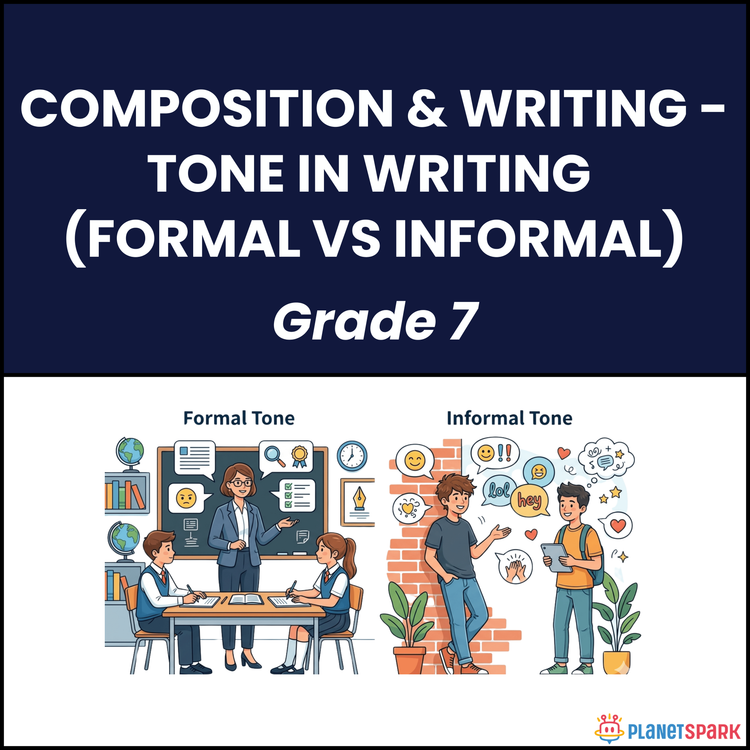
Formal tone uses polite, structured, and professional language, while informal tone is more casual and conversational.
Students may mix tones because they are more familiar with casual speech and may not recognize when a formal style is needed.
"Formal tone uses polite, complete, and structured language, such as “I am unable to attend today.” Informal tone is more relaxed and conversational, such as “I can’t come today.”